Why an Exploratory Dig Follows a Tank Sweep
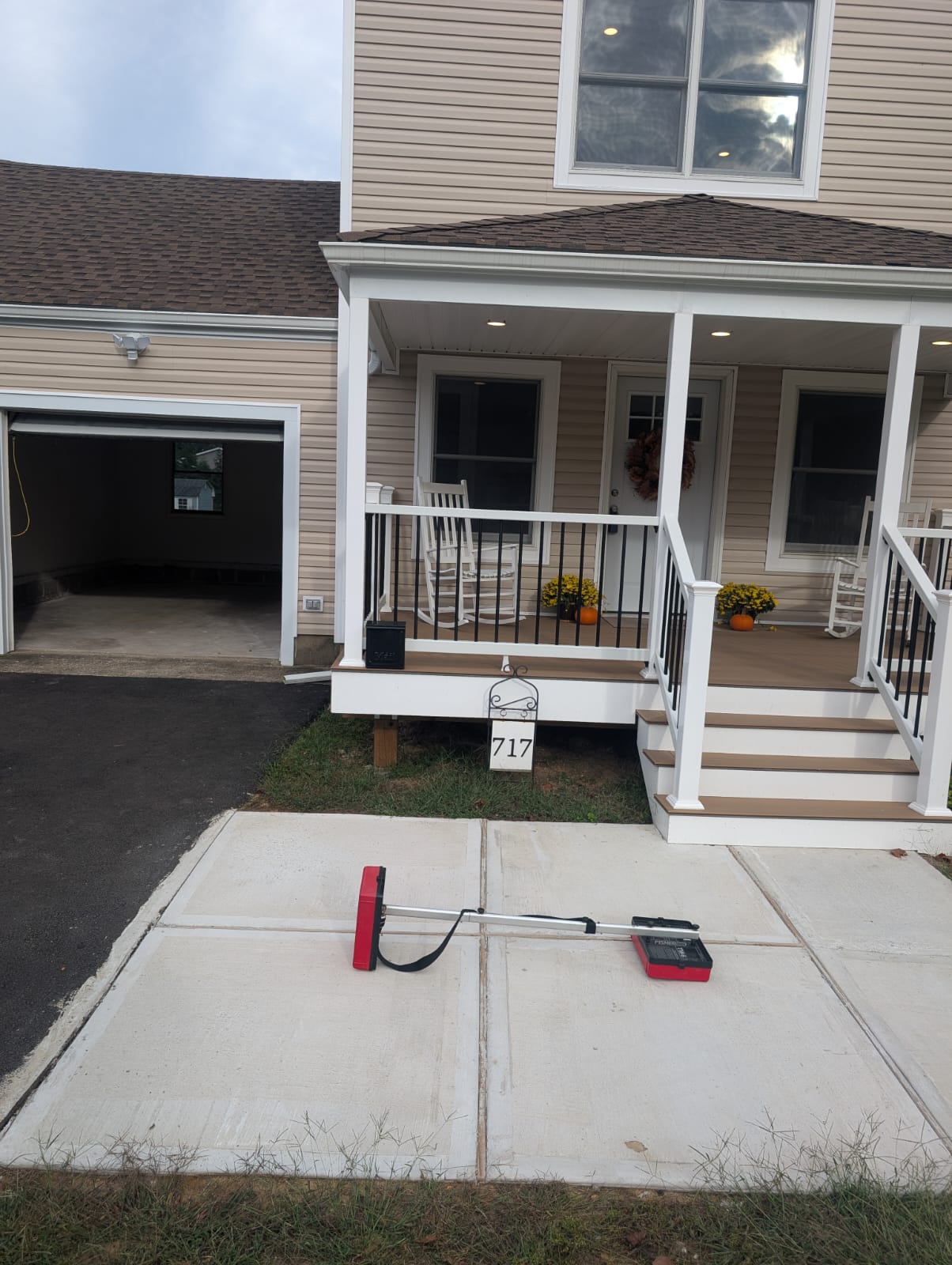
A tank sweep is a search. It can tell you that something under the lawn behaves the way a tank would. It cannot tell you what that something is. That last step belongs to an exploratory dig.
Why a signal is not an answer
Metal detection and ground penetrating radar respond to what is buried, but a buried object can be many things: an oil tank, a section of pipe, a septic component, a dry well, rebar, old foundation material or ordinary debris. Two objects can look similar on equipment and be completely different when uncovered.
If the report says “anomaly” or “possible tank,” the honest way to settle it is to look.
What a dig is, and is not
An exploratory dig is a small, targeted excavation over the spot the sweep flagged. The goal is to expose enough of the object to identify it, photograph it and document its location. It is not tank removal, and it does not clean up contamination.
If the object is not a tank, the hole is filled and the question is closed. If it is a tank, you now have a confirmed fact to work with, instead of a guess.
What happens after a tank is confirmed
Under the NJDEP’s rules for heating oil tanks, removing an underground tank requires a closure-certified individual working for a closure-certified firm. If there are signs of a discharge, the department must be notified immediately, and the owner must hire a certified subsurface evaluator or a Licensed Site Remediation Professional to investigate and clean up. A tank with no sign of a leak is a different path from a leaking one.
We cover the details in What to Do If You Find a Buried Oil Tank in NJ.
Who orders a dig
Usually the buyer’s side during an inspection period, or the seller who wants a clear answer before listing, or a homeowner who found a sign of a tank. A dig is worth doing when a sweep gives a result that is not clear. It is not needed when the sweep is clean.
Read more about our exploratory dig service, or call Oil Tank Scan NJ at 732-673-1584.